

The 3 body parts of insects
The three body parts of an insect are the head, the thorax and the abdomen. Insects also have one pair of antennae, six jointed legs attached to the thorax, and a hard exoskeleton; most adults have one or two pairs of wings. Scientists call each body region a tagma (plural tagmata).
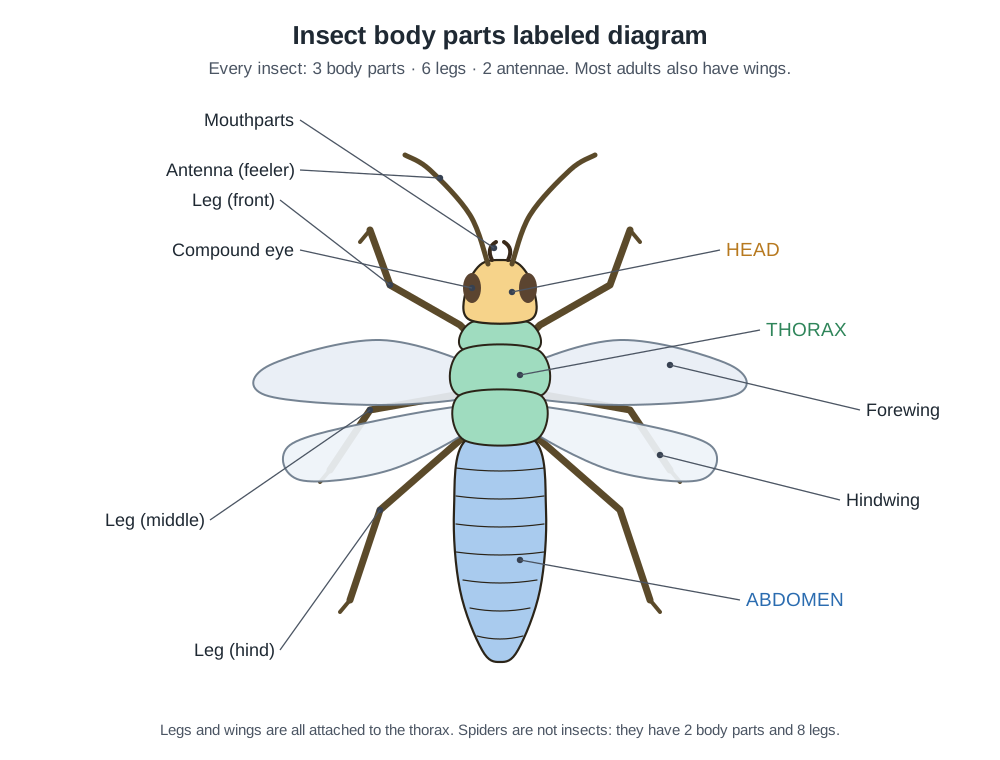
| Body part | Where it is | What it has | Main jobs |
|---|---|---|---|
| Head | Front | Antennae, compound eyes, simple eyes (ocelli), mouthparts, brain | Sensing and eating |
| Thorax | Middle | 3 segments, 6 legs, usually 2 pairs of wings, big muscles | Moving: walking, jumping, flying |
| Abdomen | Back | Up to 11 segments, spiracles, gut, heart, reproductive organs | Digesting, breathing, making eggs or sperm |
How many body parts do insects have?
Insects have three body parts. That number is part of the definition of an insect, and it is the first thing to check when you meet a small animal with an exoskeleton: three parts and six legs means insect; two parts and eight legs means spider or another arachnid; many segments with many legs means a centipede or millipede.
Each body part is itself made of segments that fused during evolution. The head is a single capsule. The thorax has exactly three segments: the prothorax, mesothorax and metathorax. The abdomen has up to 11 segments in insects such as grasshoppers, though in many groups fewer are visible. On the 3D grasshopper you can see all three thoracic segments and count the abdominal segments along its back.
The head: antennae, eyes and mouthparts
The insect head is a hard box that holds the brain and carries the sense organs and mouthparts. A grasshopper's head has the typical parts: one pair of antennae, two compound eyes made of thousands of tiny lenses, three small ocelli (simple eyes) and a set of chewing mouthparts.
Mouthparts vary more than any other head feature. Grasshoppers, beetles and ants have biting jaws (mandibles). Butterflies have a coiled drinking tube, the proboscis, made from part of the mouthparts. Whatever their shape, they are always on the head.
The thorax: six legs and the wings
The thorax is the part of an insect's body that holds the legs. Its three segments each carry one pair of legs, which is why all adult insects have six legs. Wings grow only from the second and third thoracic segments (mesothorax and metathorax), never from the first, so an insect has at most two pairs of wings.
Each insect leg has the same segments: coxa, trochanter, femur, tibia and tarsus, ending in claws and often a sticky pad. Legs are shaped for different jobs: a grasshopper's hind legs are for jumping, and a honey bee's hind legs carry a pollen basket.
| Wing type | Example | What is special |
|---|---|---|
| 2 pairs of membranous wings | Dragonflies, bees | Both pairs used for flying |
| Hardened forewings (elytra) | Beetles, ladybugs | Front pair is a shell that covers the flying hindwings |
| Leathery forewings (tegmina) | Grasshoppers, crickets | Front pair protects the fan-like hindwings |
| Scaled wings | Butterflies, moths | Covered in tiny coloured scales |
| 1 pair + halteres | Flies, mosquitoes | Hindwings are tiny knobs for balance |
| No wings | Worker ants, fleas, many stick insects | Wingless as adults |
The abdomen: digestion, breathing and eggs
The abdomen is the back body part of an insect. It has no legs and no wings (except the fleshy prolegs of caterpillars, which are not true legs). It contains most of the gut, the heart, the organs that remove waste, and the ovaries or testes, and it has small breathing holes called spiracles along its sides.
Many insects carry useful tools at the end of the abdomen: an ovipositor for laying eggs (grasshoppers and crickets), a pair of cerci that feel air movements (grasshoppers, cockroaches), or a sting, which in bees, wasps and ants is a modified egg-laying organ. A grasshopper even hears with its abdomen: its eardrums are on the first abdominal segment.
Insects vs spiders: 3 body parts or 2?
Spiders are not insects. An insect has three body parts, six legs, one pair of antennae and usually wings; a spider has two body parts (cephalothorax and abdomen), eight legs, no antennae and no wings.
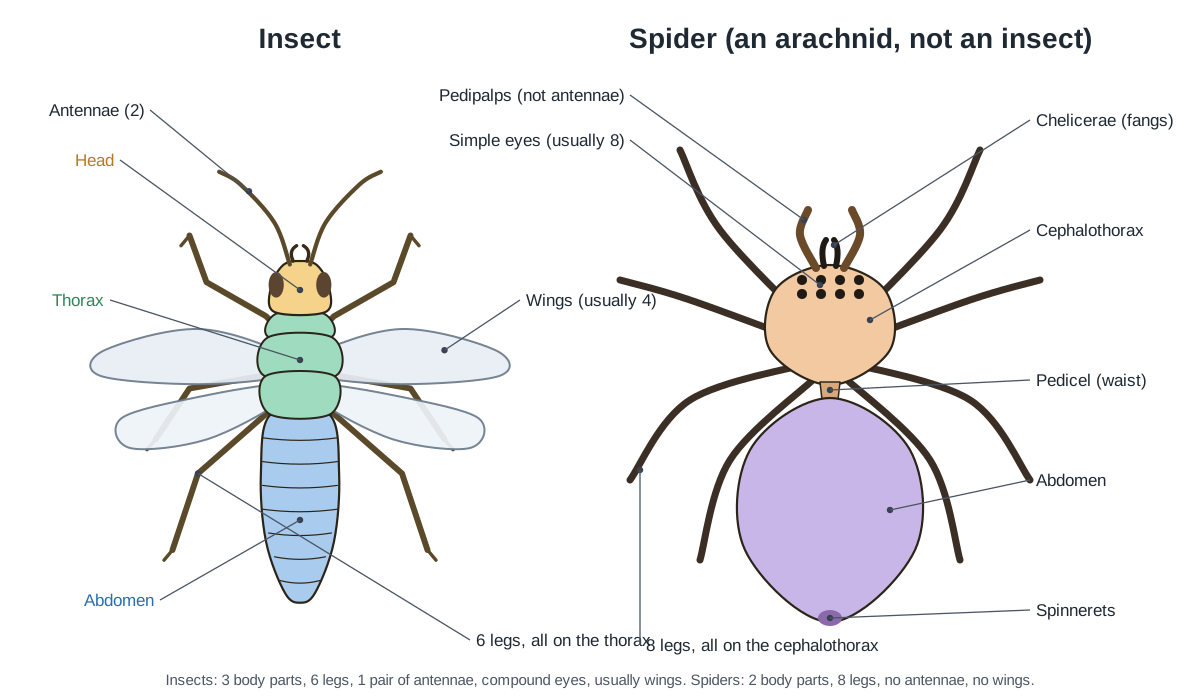
| Feature | Insect | Spider |
|---|---|---|
| Group | Class Insecta | Class Arachnida |
| Body parts | 3: head, thorax, abdomen | 2: cephalothorax, abdomen (joined by a thin pedicel) |
| Legs | 6, on the thorax | 8, on the cephalothorax |
| Antennae | 1 pair | None (pedipalps instead) |
| Wings | Usually 2 pairs (some 1 or none) | None |
| Eyes | 2 compound eyes, often 3 ocelli | Usually 8 simple eyes |
| Mouthparts | Mandibles, maxillae, labium (or a proboscis) | Chelicerae with fangs |
Insect body parts examples: ant, beetle, bee, butterfly and more
All of these animals are insects with a head, thorax, abdomen and six legs. What changes is the shape of each part.
| Insect | Head | Thorax | Abdomen |
|---|---|---|---|
| Ant | Elbowed antennae, strong mandibles | Joined to the first abdominal segment (mesosoma); wings only on queens and males | Narrow petiole (waist) of 1–2 nodes, then the gaster; many have a sting |
| Beetle | Chewing jaws | Forewings are hard elytra covering the hindwings | Hidden under the elytra |
| Bee | Antennae, compound eyes, mouthparts for nectar and pollen | 2 pairs of wings; hind legs with a pollen basket (honey bees, bumblebees) | Joined by a narrow waist; workers have a sting |
| Ladybug | Chewing mouthparts, like all beetles | Red or orange spotted elytra (it is a beetle) | Under the elytra |
| Butterfly | Clubbed antennae, big compound eyes, coiled proboscis | Scaled wings; brush-footed butterflies look four-legged | Soft and segmented; claspers or egg-laying tip at the end |
| Caterpillar | Chewing jaws, simple eyes | 3 pairs of true jointed legs | Fleshy prolegs with hooks (not true legs) |
| Stick insect | Small, with antennae | Very long; many species wingless | Long and thin |
| Cricket | Long thin antennae | Leathery forewings that males rub to sing; ears on the front tibiae | Long needle-like ovipositor (female), long cerci |
| Grasshopper | Short antennae, chewing mouthparts | Jumping hind legs, tegmina and hindwings | Ears (tympana) on segment 1, short digging ovipositor |
Insect body parts for preschool and kindergarten
Young children can learn insect body parts with three words and two numbers: head, thorax, abdomen; six legs; two antennae. A few ideas that work in class or at home:
- Build an insect from three balls of play dough, six pipe-cleaner legs and two pipe-cleaner antennae. Check that all the legs go on the middle ball.
- Sing "head, thorax, abdomen" to the tune of "Head, Shoulders, Knees and Toes", touching each part.
- Go on a bug hunt and count legs: six means insect, eight means spider.
- Rotate the 3D grasshopper above and switch off the head, thorax or abdomen to see each part on its own.
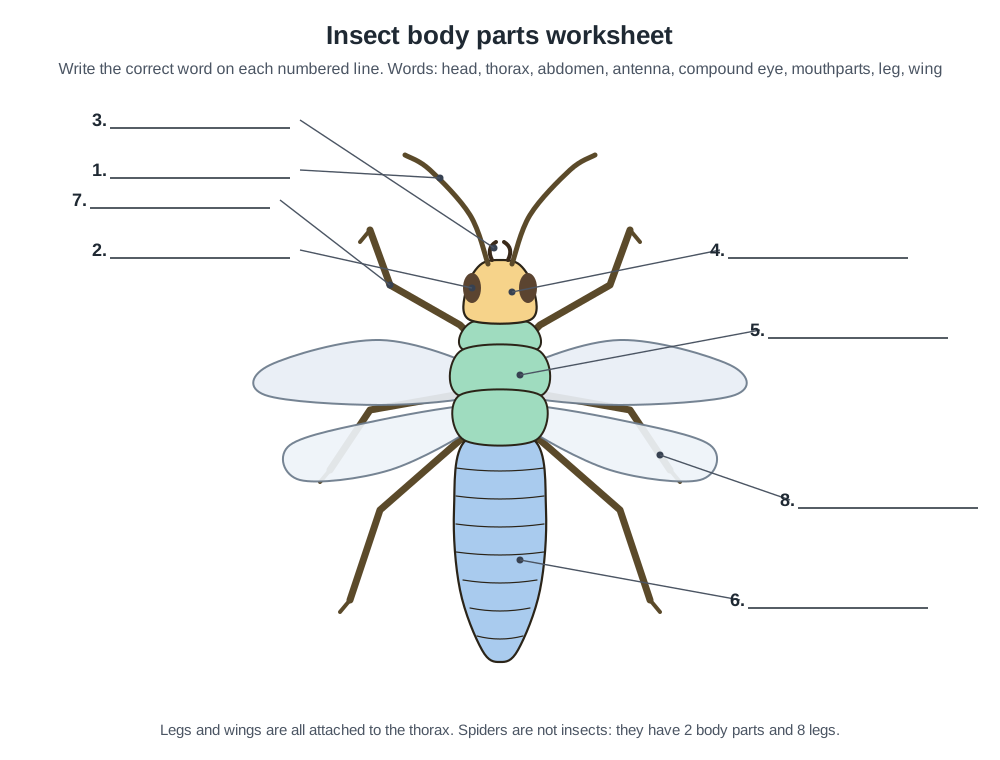
Label the insect body parts worksheet (printable)
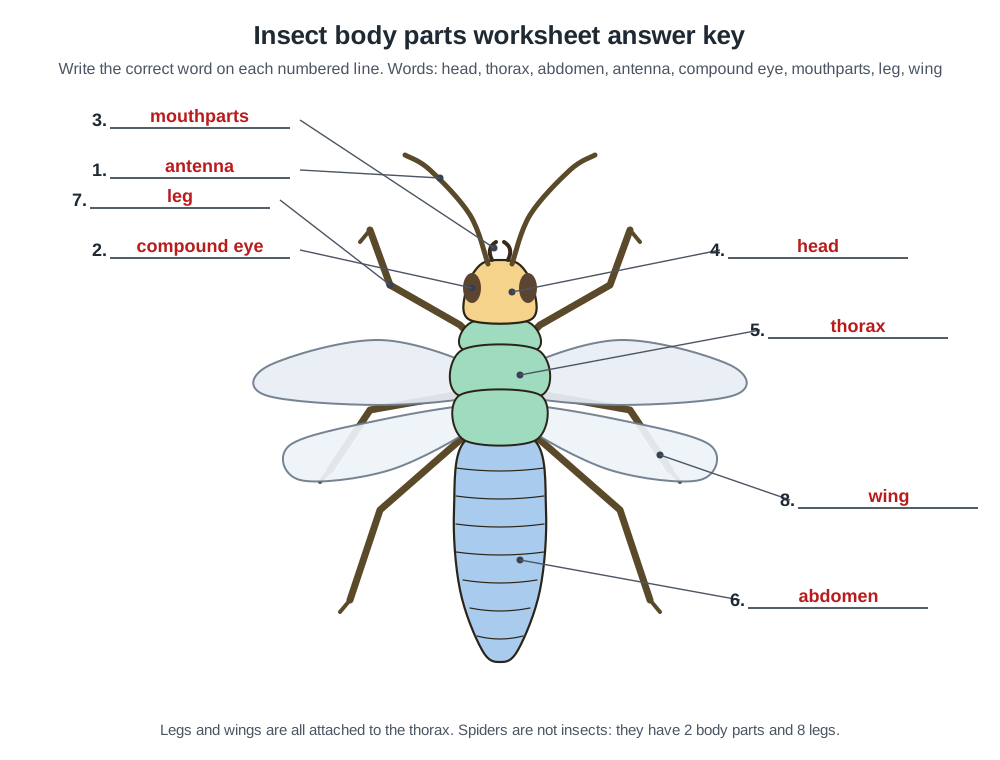
Print the worksheet below and write the correct word on each numbered line. The word bank is printed at the top. Answers: 1 antenna, 2 compound eye, 3 mouthparts, 4 head, 5 thorax, 6 abdomen, 7 leg, 8 wing.
Show the answer key
Insect body parts labeled on the 3D model
Every part of the 3D grasshopper, grouped by body region. Organs inside the body, such as the gut, heart and brain, are listed under "Organs inside".
Head
- Head (Head capsule)
- Body part 1: the head, a hard capsule with the eyes, antennae and mouthparts. Senses the world and eats. It holds the brain, two compound eyes, three simple eyes, one pair of antennae and the mouthparts.
- Vertex
- The top of the head between and behind the compound eyes. Roofs over the brain. Its pointed front tip, between the antennae, is called the fastigium.
- Frons (Forehead, face)
- The flat front face of the head, below the antennae. Forms the face and carries the median ocellus on its central ridge.
- Gena (Cheek (plural genae))
- The side of the head below and behind each compound eye: the grasshopper's cheek. Protects the side of the head and covers the attachment of the large mandible muscles.
- Clypeus
- A broad plate at the bottom of the face, between the frons and the labrum. Supports the labrum (upper lip) and anchors muscles of the pharynx.
- Compound eyes
- Two large oval eyes, each made of thousands of tiny units called ommatidia. Form an image and detect movement over a very wide field of view.
- Ocelli (Simple eyes (3))
- Three tiny simple eyes: one median ocellus on the face and two lateral ocelli. Sense light intensity and changes in brightness rather than forming detailed images.
- Antennae (Feelers: scape, pedicel and flagellum)
- One pair of jointed, thread-like feelers on the front of the head. Smell and touch: they carry many sense organs that detect odours, food plants and contact.
- Labrum (Upper lip)
- A broad, movable flap that forms the front wall of the mouth. Holds food in place between the jaws while they chew.
- Mandibles (Jaws)
- A pair of hard, dark jaws with cutting edges and grinding surfaces. Cut and grind leaves. They move from side to side, not up and down.
- Maxillae (Second jaws: cardo, stipes, lacinia, galea)
- A pair of jointed mouthparts behind the mandibles that handle food. Hold and push food towards the mandibles. Their lacinia and galea manipulate the food.
- Maxillary palps
- Long, five-segmented sensory feelers on the maxillae. Taste and touch food before it is eaten.
- Labium (Lower lip)
- The lower lip, formed from a pair of appendages fused together on the midline. Closes the back of the mouth and pushes food forward.
- Labial palps
- A pair of short, three-segmented sensory feelers on the labium. Taste and touch food.
- Hypopharynx (Tongue)
- A soft, tongue-like lobe in the middle of the mouthparts. Mixes food with saliva; the salivary duct opens just behind it.
Thorax (legs & wings)
- Thorax: prothorax (Covered by the pronotum)
- Body part 2 begins here: the first of the three thorax segments, covered by a saddle-shaped shield. Carries the front pair of legs. Every insect leg grows from the thorax.
- Prosternal spine (Prosternal tubercle)
- A short peg on the underside of the prothorax, between the front legs. An identification feature: it marks the spur-throated grasshoppers and lubbers.
- Thorax: mesothorax
- The middle thorax segment. Carries the middle pair of legs and the front pair of wings.
- Thorax: metathorax
- The last thorax segment. Carries the back (jumping) pair of legs and the back pair of wings.
- Coxae (Singular coxa)
- The short first segment of each leg, joined to the thorax. Swing the leg forwards and backwards.
- Trochanters
- A small second leg segment between the coxa and the femur. Acts as a hinge that lets the femur move up and down.
- Femora (fore and middle legs) (Singular femur, the 'thigh')
- The long third segment of the front and middle walking legs. Contain the muscles that move the tibia for walking and climbing.
- Hind femur (Jumping 'thigh', metathoracic femur)
- The enlarged, club-shaped femur of the hind (jumping) leg. Holds the large extensor muscle that powers the jump. The leg is a saltatorial (jumping) leg.
- Tibiae (fore and middle legs) (Singular tibia, the 'shin')
- The slender fourth segment of the walking legs. Lever the tarsus forward for walking and holding food.
- Hind tibia (With tibial spines and spurs)
- The long tibia of the jumping leg, armed with two rows of spines. Kicks out to launch the jump. Its spines grip the ground and make defensive kicks painful.
- Tarsi (Feet (tarsomeres))
- The jointed foot of each leg, made of short segments called tarsomeres. Grip the surface when walking and climbing.
- Tarsal pads (Pulvilli, euplantulae)
- Soft friction pads on the underside of the tarsus. Give grip on smooth leaves and stems.
- Tarsal claws (Pretarsal claws, ungues)
- A pair of hooked claws at the tip of every leg. Hook into rough surfaces such as bark and leaf edges.
- Arolium
- A soft pad between the two claws. Sticks to smooth surfaces where claws cannot grip.
- Forewings (tegmina) (Singular tegmen)
- Narrow, leathery forewings that cover the hindwings at rest. Protect the delicate hindwings. In flying grasshoppers they also add some lift.
- Hindwings
- Thin, membranous wings that fold like a fan under the forewings. The flight wings of grasshoppers that fly. In the lubber they are too short for flight and are flashed in a warning display.
Abdomen
- Abdomen (11 segments (top plates shown))
- Body part 3: the long, segmented abdomen behind the thorax. Holds most of the gut, the heart and the organs that make eggs or sperm. It has no legs and no wings.
- Abdomen: underside plates (Sternites)
- The ventral plates of the abdominal segments. Protect the nerve cord and gut from below. The last sternites form the subgenital plate (male) or genital plate and egg guide (female).
- Tympanum (Tympanic membrane, tympanal (hearing) organ)
- A thin oval eardrum on each side of the first abdominal segment. Vibrates in response to sound. Sense cells attached to its inner side send the signal to the nerve cord.
- Epiproct (Supra-anal plate (11th tergite))
- A triangular plate that covers the anus from above. Protects the anus. It is the tergite of the reduced 11th segment.
- Paraprocts
- A pair of small plates beside and below the anus. Close the anus from the sides; together with the epiproct they form the last (11th) segment.
- Cerci (Singular cercus)
- A pair of short, pointed sensory appendages at the tip of the abdomen. Touch and air-current receptors. In males of many species their shape helps identify the species.
- Ovipositor: dorsal valves (Upper valves (third valvulae)) · females only
- The upper pair of short, curved, hard digging valves at the tip of a female's abdomen. Dig into soil by opening and closing against the ventral valves, so the female can lay eggs below ground.
- Ovipositor: ventral valves (Lower valves (first valvulae)) · females only
- The lower pair of large, hard digging valves of the ovipositor. Work with the dorsal valves to drill a hole in the soil for the egg pod.
- Genital plate & egg guide (Sternite 8, female subgenital plate) · females only
- The female's eighth sternite, with a small triangular egg guide at its rear edge. Guides each egg from the genital opening (gonopore) into the ovipositor.
- Subgenital plate (Male ninth sternite) · males only
- A large, upturned, boat-shaped plate that forms the rounded tip of a male's abdomen. Forms a cup that encloses and protects the male genitalia (phallus).
- Spiracles (Breathing pores (10 pairs))
- Small openings along the sides of the body that let air into the tracheae. Let air in and out; tiny valves close them to save water.
Organs inside
- Extensor tibiae muscle
- The huge muscle in the hind femur that straightens the leg to jump. Contracts slowly while the flexor holds the leg folded, storing energy; the stored energy is then released at once to kick the tibia out.
- Flexor tibiae muscle
- The smaller muscle in the hind femur that folds the tibia. Folds the tibia and holds it locked while the extensor builds up force before a jump.
- Thoracic (leg and wing) muscles
- Large bundles of muscle that fill much of the thorax. Move the legs and wings. In flying grasshoppers they power flight.
- Mouth & pharynx
- The mouth opening and the muscular tube behind it that swallows food. Pumps chewed food from the mouth into the oesophagus.
- Oesophagus (Esophagus)
- A narrow tube that carries food from the pharynx to the crop. Carries food to the crop. The brain lies above it and the suboesophageal ganglion below it.
- Crop
- A large, thin-walled sac for storing food. Stores chewed leaves. Some digestion of carbohydrates starts here, using saliva and enzymes passed forward from the midgut.
- Gizzard (proventriculus)
- A short, muscular, narrower section after the crop. Grinds food with tooth-like ridges (denticles) on its inner lining and controls passage into the midgut.
- Gastric caeca (Digestive caeca, gastric pouches (singular caecum))
- Six finger-like pouches around the front end of the midgut. Secrete digestive enzymes and absorb nutrients, adding surface area to the midgut.
- Midgut (stomach) (Ventriculus, mesenteron)
- The middle part of the gut, where most digestion and absorption happen. Secretes digestive enzymes and absorbs the digested food into the hemolymph.
- Ileum (Anterior intestine)
- The first, wide part of the hindgut. Moves waste back and starts absorbing water and salts.
- Colon
- A short, narrow section of hindgut between the ileum and rectum. Carries waste to the rectum and absorbs some water.
- Rectum (With 6 rectal pads (rectal papillae))
- The last, ridged chamber of the gut. Reabsorbs water and salts from waste, so the insect excretes dry pellets and saves water.
- Anus
- The exit of the gut. Releases dry fecal pellets (frass).
- Salivary glands
- Paired clusters of small white glands that make saliva. Produce saliva that moistens food. The two ducts join and open behind the hypopharynx.
- Malpighian tubules
- Very many long, thread-like tubes attached to the gut where the midgut meets the hindgut. Remove nitrogen wastes and excess salts from the hemolymph and pass them into the hindgut. They do the job of kidneys.
- Heart (dorsal vessel)
- A slender, transparent tube along the top of the abdomen. Pumps hemolymph forward into the aorta. Hemolymph re-enters it through paired slits (ostia) in each segment.
- Aorta
- The front part of the dorsal vessel, a simple tube without ostia. Carries hemolymph from the heart to the head, where it empties near the brain.
- Alary muscles (Wing-shaped heart muscles)
- Fan-shaped pairs of fine muscles that attach the heart to the sides of each segment. Pull the heart open between beats so hemolymph flows in through the ostia.
- Tracheae (Air tubes; ends: tracheoles)
- A network of silvery air tubes that carries oxygen to every tissue. Deliver oxygen directly to cells and carry carbon dioxide away. The finest branches (tracheoles) reach individual cells.
- Air sacs
- Large, thin-walled, white balloons of the tracheal system. Store air and act like bellows when the abdomen pumps, moving air through the tracheae.
- Brain (Supraoesophageal ganglion, cerebral ganglion)
- The main nerve centre, in the head above the oesophagus. Processes signals from the eyes, ocelli and antennae and coordinates behaviour.
- Optic lobes
- Large side lobes of the brain that connect to the compound eyes. Process visual information from the thousands of ommatidia.
- Circumoesophageal connectives
- A pair of nerve cords that loop around the oesophagus. Connect the brain above the gut to the suboesophageal ganglion below it.
- Suboesophageal ganglion
- A ganglion in the lower head, below the oesophagus. Controls the mandibles, maxillae, labium, salivary glands and neck muscles.
- Thoracic ganglia
- Three large ganglia, one in each thoracic segment. Control the legs and wings of their segment, so walking and jumping are partly run locally.
- Abdominal ganglia
- Five small ganglia along the abdominal nerve cord. Control abdominal breathing movements, the gut and, in the last one, the genitalia and cerci.
- Ventral nerve cord
- A double nerve cord along the floor of the body, linking the ganglia. Carries signals between the brain and the segmental ganglia.
- Ovaries (With ovarioles and eggs) · females only
- Two large, bright-yellow organs packed with developing eggs. Produce eggs. Each ovary is made of many egg tubes (ovarioles).
- Lateral oviducts · females only
- A tube from each ovary that carries eggs backwards. Carry eggs from the ovaries to the vagina.
- Vagina (common oviduct) · females only
- The single tube formed where the two oviducts join. Carries eggs to the gonopore on the genital plate (sternite 8).
- Seminal receptacle (Spermatheca) · females only
- A small sac with a coiled duct that stores sperm after mating. Stores sperm and releases it onto the eggs as they are laid.
- Testes · males only
- Two testes fused into what looks like a single mass on top of the gut. Produce sperm in many small tubes called follicles.
- Vasa deferentia (Sperm ducts (singular vas deferens)) · males only
- A pair of white sperm ducts from the testes. Carry sperm from the testes towards the ejaculatory duct.
- Seminal vesicles · males only
- Small bright-white sacs that store mature sperm. Store sperm before mating.
- Accessory glands · males only
- A tuft of many blind-ending tubules near the base of the ejaculatory duct. Make seminal fluid and the spermatophore, a protein package that delivers sperm to the female.
- Ejaculatory duct · males only
- The single duct that carries sperm to the phallus. Carries sperm and seminal fluid out through the phallus.
- Phallus (Penis, aedeagus, phallic complex) · males only
- The male copulatory organ, folded inside the subgenital plate. Transfers the spermatophore into the female during mating.
- Fat body
- Loose, creamy-white lobes of tissue spread through the body cavity. Stores fat, protein and sugar, makes blood proteins and egg-yolk proteins, and processes nitrogen wastes: it works rather like a liver.
What makes an animal an insect?
Insects are the arthropods with a body in three parts (head, thorax and abdomen), one pair of antennae, six jointed legs attached to the thorax, and a hard outer covering, the exoskeleton. Most adult insects also have one or two pairs of wings. These features separate insects from other arthropods such as spiders, centipedes and crustaceans. (Australian Museum. Insects.)
The thorax is always made of three segments: the prothorax, mesothorax and metathorax. Each carries one pair of legs. Wings, when present, grow only from the mesothorax and metathorax, never from the prothorax. That is why an insect has at most two pairs of wings and why the legs and wings always attach to the middle body part. (NC State University, General Entomology: wings.)
Do all insects have three body parts? The tricky cases
Yes, every insect has a head, thorax and abdomen, but they are not always easy to see. In ants, bees and wasps the first abdominal segment (the propodeum) is joined to the thorax, forming a middle section called the mesosoma; the narrow 'waist' behind it, the petiole, is part of the abdomen. So the obvious waist of an ant is not the boundary between thorax and abdomen. (Wikipedia. Mesosoma.)
Larvae are another tricky case. A caterpillar has a head, a thorax with three pairs of true, jointed legs, and a long abdomen with fleshy prolegs. Prolegs are not true legs: they have no joints, work partly by fluid pressure, and grip with tiny hooks called crochets. So a caterpillar still has six true legs, even if it seems to have many more. (Wikipedia. Proleg.)
Wings vary even more. Flies have one pair of wings; their hindwings are reduced to small knobs called halteres, which act like gyroscopes for balance. Beetles' forewings are hardened covers (elytra). Many insects, such as worker ants, fleas and many stick insects, have no wings at all as adults. (Wikipedia. Halteres.)
Why spiders are not insects
A spider is an arachnid. Its body has only two parts: the cephalothorax, where head and thorax are fused, and the abdomen, joined by a slim waist called the pedicel. It has eight walking legs, all on the cephalothorax, usually eight simple eyes, fang-tipped jaws called chelicerae, a pair of pedipalps for touch and taste, and silk-spinning spinnerets on the abdomen. (Australian Museum. What is a spider?.)
Spiders have no antennae and no wings: the front pair of appendages are the pedipalps, which in males are also used for mating. Their simple eyes each have a single lens, unlike the compound eyes of insects. Most spiders breathe with book lungs, and many also have tracheae. (Wikipedia. Spider anatomy.)
Body parts of common insects
Butterflies show the three parts clearly. The head carries large compound eyes, clubbed antennae and a coiled tube for drinking nectar, the proboscis, formed from the maxillae. The thorax has three pairs of legs, though brush-footed butterflies hold the front pair folded and look four-legged, and the second and third thoracic segments carry the scaled wings. Butterflies go through complete metamorphosis: egg, caterpillar, chrysalis, adult. (Wikipedia. Butterfly.)
Crickets are close relatives of grasshoppers but hear with eardrums on the tibiae of their front legs, have long thin antennae, and the female has a long, needle-like ovipositor. Male crickets sing by rubbing their leathery forewings together. Stick insects can be very long, up to 64 cm including the legs in one species, and many are wingless, but they still have the same three body parts. (Wikipedia. Cricket (insect).)
Ants have elbowed antennae and strong mandibles, and only the queens and males have wings. Honey bees and bumblebees carry pollen in a pollen basket (corbicula) on the outer side of each hind tibia. Ladybugs are small beetles: their red, spotted shell is a pair of hardened forewings (elytra) that cover the thin flying hindwings. (Wikipedia. Ant.)
To go from the three body parts to every organ inside, explore the grasshopper anatomy page.
Go further
For a grasshopper's internal organs, mouthparts and life cycle in detail, see grasshopper anatomy. For a step-by-step lab, see the grasshopper dissection guide.
Frequently asked questions
What are the 3 body parts of an insect?
The head, the thorax and the abdomen. The head has the eyes, antennae and mouthparts; the thorax, the middle part, has the six legs and the wings; the abdomen, the back part, holds most of the organs for digestion and reproduction.
How many body parts do insects have?
Three main body parts: head, thorax and abdomen. Each is built from segments: the thorax always has three, and the abdomen has up to eleven.
Which part of an insect's body holds the legs?
The thorax, the middle body part. Each of its three segments carries one pair of legs, so every insect has six legs. The wings also attach to the thorax.
Do all insects have 3 body parts?
Yes, though they can be hard to see. In ants, bees and wasps the first abdominal segment is joined to the thorax, so the narrow waist is inside the abdomen. Caterpillars and other larvae also have a head, thorax and abdomen.
Is a spider an insect?
No. A spider is an arachnid. It has two body parts (cephalothorax and abdomen), eight legs, no antennae and no wings. Insects have three body parts, six legs and one pair of antennae.
Do all insects have wings?
No. Most adult insects have one or two pairs of wings, but some, such as worker ants and many stick insects, have none. Young insects such as nymphs and caterpillars never have working wings.
Why do caterpillars look like they have more than six legs?
A caterpillar has six true, jointed legs on its thorax. The stubby 'legs' on its abdomen are prolegs: fleshy, unjointed grippers with tiny hooks, which disappear when it becomes a butterfly or moth.
What is the middle part of an insect called?
The thorax. (It is also the answer to the crossword clue 'middle part of an insect's body'.)
References
- Australian Museum. Insects
- NC State University, General Entomology: the thorax
- NC State University, General Entomology: wings
- NC State University, General Entomology: legs
- NC State University, General Entomology: the abdomen
- NC State University, General Entomology: the insect head
- Australian Museum. What is a spider?
- Wikipedia. Spider anatomy
- Wikipedia. Mesosoma
- Wikipedia. Ant
- Wikipedia. Proleg
- Wikipedia. Butterfly
- Wikipedia. Cricket (insect)
- Wikipedia. Phasmatodea (stick and leaf insects)
- Wikipedia. Halteres
- Wikipedia. Pollen basket
- Fox, R. (2006). Romalea microptera, eastern lubber grasshopper. Invertebrate Anatomy OnLine, Lander University
More interactive anatomy models
- Grasshopper anatomyExternal and internal anatomy of the grasshopper, with mouthparts.
- Grasshopper dissectionGuided grasshopper dissection: crop, gastric caeca, heart and tracheae.
- Butterfly anatomyScaled wings, proboscis, compound eyes and internal organs of a butterfly.
- Ant anatomyAnt body parts: elbowed antennae, mandibles, petiole and stinger.
- Honeybee anatomyWorker bee anatomy: pollen baskets, honey stomach, sting and wax glands.
- Human anatomy1,000+ bones, muscles, organs, vessels and nerves from real anatomical data.