

Anatomy of a seed: the three main parts
Every seed has three main parts: a seed coat that protects it, an embryo (a tiny, dormant plant) and a food store that feeds the embryo until it can make its own food. The food is either a separate tissue, the endosperm, or it has been moved into the embryo's first leaves, the cotyledons.
The embryo itself always has the same plan. Along its embryonic axis are a root end, the radicle, and a shoot end, the plumule (the shoot tip with its first leaves). The cotyledons are attached part-way along it. The piece of axis below the cotyledons is the hypocotyl ("below the cotyledons") and the piece above them is the epicotyl ("above the cotyledons").
This page compares the two seeds used in almost every biology class. The common bean, Phaseolus vulgaris (kidney, pinto, navy and black beans are all this species), is a eudicot (dicot) seed with two cotyledons and no endosperm left at maturity. The corn kernel, Zea mays, is a monocot with one cotyledon, the scutellum, and a huge endosperm. Botanically the kernel is not just a seed but a one-seeded fruit called a caryopsis, because its fruit wall is fused to the seed coat.
Parts of a seed and their functions
The parts of a seed and their functions are summarised in this table. The first column lists the general part; the next two give its name in a bean and in a corn kernel.
| Part | In a bean | In a corn kernel | Function |
|---|---|---|---|
| Seed coat | Testa (with hilum, micropyle, raphe) | Pericarp fused to the seed coat | Protects the seed; controls water entry |
| Attachment scar | Hilum | Tip cap (pedicel) | Where the seed was connected to the parent plant |
| Food store | Two cotyledons | Endosperm (horny and floury) with aleurone layer | Starch, protein and oil for the seedling |
| Cotyledon(s) | Two, large and fleshy | One, the scutellum | Bean: storage. Corn: absorbs food from the endosperm |
| Embryonic shoot | Plumule: epicotyl, first true leaves, shoot tip | Plumule inside the coleoptile | Becomes the stem and leaves |
| Embryonic root | Radicle | Radicle inside the coleorhiza | Becomes the first root; emerges first |
| Stem below the cotyledons | Hypocotyl | Mesocotyl region of the embryonic axis | Bean: lifts cotyledons. Corn: lifts the coleoptile |
The seed coat forms from the integuments of the ovule. The embryo grows from the fertilized egg. The endosperm comes from a second fertilization, which is why a bean and a corn kernel can look so different but still be built from the same pieces.
Bean seed anatomy
The anatomy of a bean seed is: a tough testa (seed coat) with an oval hilum on the inner, concave edge, a tiny micropyle at one end of the hilum, a small bump called the strophiole (lens) at the other end, and a ridge, the raphe. Inside are two large cotyledons and, between them by the hilum, the curved embryonic axis: radicle, hypocotyl, epicotyl and a plumule of two folded leaves.
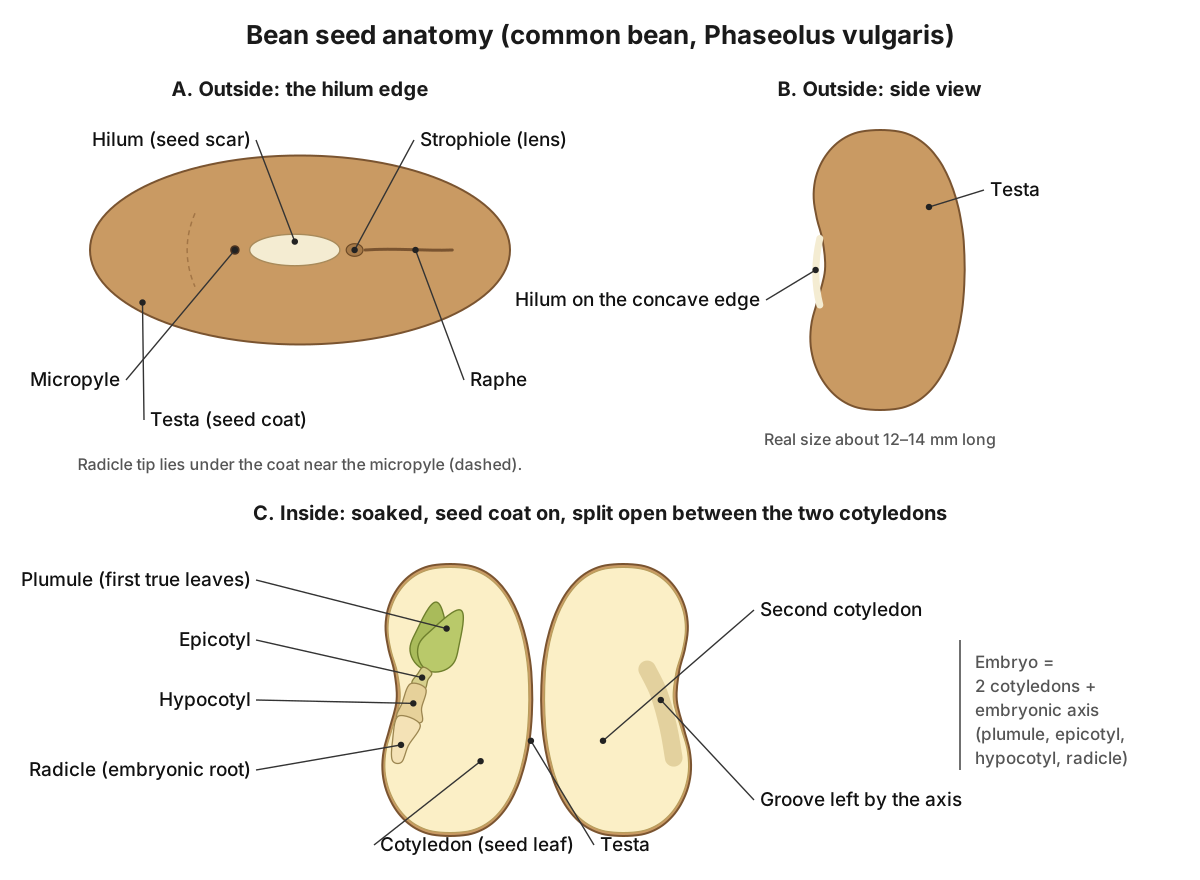
Outside the bean
- Testa (seed coat): Protects the embryo from drying out, injury, fungi and insects, and controls how fast water gets in. It forms from the integuments, the outer layers of the ovule.
- Hilum: Marks where the seed was attached to the pod by its stalk, the funiculus, which brought it water and food while it grew.
- Micropyle: The opening in the ovule through which the pollen tube entered before fertilization. In the seed it lets water in, and the radicle usually breaks out next to it.
- Strophiole (lens): A weak spot in the seed coat. In many legumes it is the place where water first gets into a hard seed when the seed coat is heated or scratched.
- Raphe: Marks where the stalk of the ovule (funiculus) was fused to the side of the ovule as it grew. A vascular strand ran along it into the seed.
Inside the bean: the embryo
- Cotyledons: Store the food (mainly starch and protein) that feeds the seedling until it can photosynthesize. In a bean they are lifted above the soil and turn green for a few days.
- Plumule (first true leaves): Becomes the shoot. The two folded leaves open as the first true leaves (the primary leaves) of the bean plant, above the cotyledons.
- Shoot apical meristem: Makes all the stem, leaves and flowers that grow above ground for the rest of the plant's life.
- Epicotyl: Becomes the first part of the stem above the cotyledons. In a bean it stays short at first; in a pea, where the cotyledons stay underground, the epicotyl is what grows up through the soil.
- Hypocotyl: In a bean it grows fast after germination, bends into a hook, and pulls the cotyledons up out of the soil (epigeal germination). It becomes the lower stem.
- Radicle: Grows down into the soil and becomes the primary root, which branches to form the bean's taproot system.
Almost all of a bean is embryo. The two cotyledons are packed with starch and protein, which is why beans are such good food for people too. A bean has no endosperm when it is ripe: the endosperm was absorbed by the growing embryo, and its food was moved into the cotyledons. The same is true of peas, peanuts, soybeans and most other legumes.
To see these parts yourself, soak a dry bean, look for the hilum and micropyle, then peel off the testa and split the bean along its back edge. The radicle tip is just inside the micropyle, so the two are easy to find together. The Botanist in the Kitchen notes that the micropyle is much easier to see on Phaseolus beans than on chickpeas.
Corn seed anatomy
The anatomy of a corn seed (a maize kernel) is: a thin outer pericarp (the fruit wall fused to the seed coat), a one-cell-thick aleurone layer, a large endosperm of hard horny and soft floury starch, and the germ (embryo) on one face. The germ is a big shield-shaped cotyledon, the scutellum, wrapped round an embryonic axis with a coleoptile over the shoot and a coleorhiza over the root. The tip cap at the bottom joined the kernel to the cob, and a tiny silk scar on the crown marks where its silk was attached.
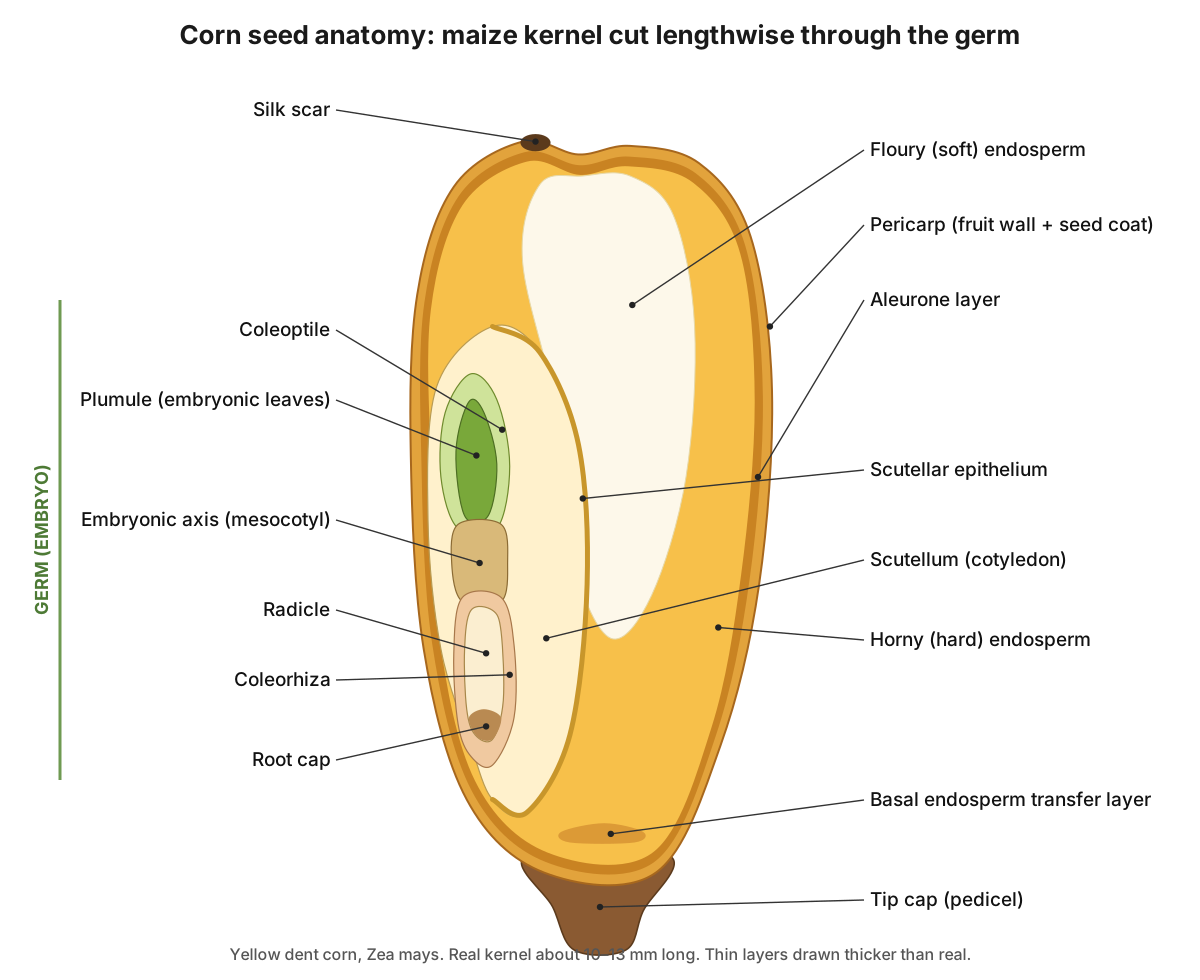
Outer layers and attachment
- Pericarp (fruit wall and seed coat): Protects the kernel from insects, fungi and drying out. Because the fruit wall and seed coat are fused, the kernel is a fruit called a caryopsis.
- Tip cap (pedicel): The attachment point to the cob; water and nutrients flowed in through it while the kernel filled. During germination water enters the kernel mainly here.
- Silk scar: Each corn silk is the long style of one flower. Pollen landing on the silk grows a pollen tube down it to the ovule; after fertilization the silk withers and leaves this scar.
Endosperm
- Aleurone layer: When the seed germinates, gibberellin from the embryo signals the aleurone cells to make enzymes that digest the starch and protein of the endosperm into food the embryo can absorb.
- Horny endosperm: Stores starch and protein. Its starch grains are packed tightly in a protein (zein) matrix, which makes it hard and translucent.
- Floury endosperm: The main starch store. Its loosely packed starch grains, with air spaces between them, make it opaque and soft.
- Basal endosperm transfer layer: Transfer cells with ingrown walls that take in sugars and amino acids from the mother plant while the kernel fills.
Germ (embryo)
- Scutellum (cotyledon): An absorbing organ: during germination it takes up the sugars and amino acids released from the endosperm and passes them to the growing seedling. It also stores oil.
- Scutellar epithelium: Absorbs digested food from the endosperm into the scutellum. It also releases some digestive enzymes of its own.
- Coleoptile: Protects the delicate first leaves as the shoot pushes up through the soil. Once its tip reaches the light it stops growing, and the first true leaf breaks out through its tip.
- Plumule (embryonic leaves): Becomes the shoot: the first leaves grow out through the tip of the coleoptile after it reaches the soil surface.
- Embryonic axis (mesocotyl and node): Contains the mesocotyl, the first internode, which lengthens after germination to lift the coleoptile up to the soil surface.
- Coleorhiza: Protects the radicle; at germination it grows out of the kernel first and the radicle then breaks through it.
- Radicle: Becomes the primary root. It is the first part to emerge, usually within two to three days in warm, moist soil (Purdue Extension).
- Root cap: Protects the root's growing point as the root pushes through soil, and senses gravity so the root grows downward.
The endosperm is about 82% of the kernel and holds mainly starch and protein; the germ holds the oil and some protein; the pericarp and tip cap are mostly fiber (U.S. Grains Council). The endosperm has two textures. Horny (hard, vitreous) endosperm is glassy and yellow because its starch grains are packed tightly in protein. Floury (soft, opaque) endosperm is white and chalky. Corn types differ mainly in the mix: flint corn and popcorn are mostly horny, flour corn is almost all floury, and dent corn has a floury core that shrinks as the kernel dries and makes the dent in its crown.
Most of the endosperm is dead at maturity. Its starchy cells go through programmed cell death while the kernel fills; only the aleurone layer stays alive. Maize has a single aleurone layer, while barley has up to three (Sabelli & Larkins, 2009).
Seed anatomy labeled: all 26 parts
This is the text version of the 3D model: every labeled part of the bean and the corn kernel, grouped by seed and tissue, with what it does. Use it as a study list or to check a seed anatomy labeling worksheet.
Bean seed coat
- Testa (seed coat) (Seed coat, bean skin)
- The thin, tough skin around the bean. It peels off easily after the bean is soaked. Protects the embryo from drying out, injury, fungi and insects, and controls how fast water gets in. It forms from the integuments, the outer layers of the ovule.
- Hilum (Seed scar, the bean's 'belly button')
- An oval scar on the inner, concave edge of the bean, often white or a different colour from the rest of the coat. Marks where the seed was attached to the pod by its stalk, the funiculus, which brought it water and food while it grew.
- Micropyle
- A tiny pore in the seed coat beside one end of the hilum. The opening in the ovule through which the pollen tube entered before fertilization. In the seed it lets water in, and the radicle usually breaks out next to it.
- Strophiole (lens) (Lens)
- A small raised bump on the edge of the bean at the end of the hilum opposite the micropyle. A weak spot in the seed coat. In many legumes it is the place where water first gets into a hard seed when the seed coat is heated or scratched.
- Raphe
- A faint ridge running along the edge of the seed coat from the hilum. Marks where the stalk of the ovule (funiculus) was fused to the side of the ovule as it grew. A vascular strand ran along it into the seed.
Bean embryo
- Cotyledons (Seed leaves, the two bean halves)
- The two big, fleshy halves of the bean. They are the first leaves of the embryo and fill almost the whole seed. Store the food (mainly starch and protein) that feeds the seedling until it can photosynthesize. In a bean they are lifted above the soil and turn green for a few days.
- Plumule (first true leaves) (Embryonic shoot, primary leaves)
- Two tiny, folded leaves at the top of the embryonic axis, lying between the cotyledons. Becomes the shoot. The two folded leaves open as the first true leaves (the primary leaves) of the bean plant, above the cotyledons.
- Shoot apical meristem (Shoot tip, growing point)
- A tiny dome of dividing cells hidden between the two plumule leaves. Makes all the stem, leaves and flowers that grow above ground for the rest of the plant's life.
- Epicotyl
- The short piece of the embryonic axis above the cotyledons, carrying the plumule. Becomes the first part of the stem above the cotyledons. In a bean it stays short at first; in a pea, where the cotyledons stay underground, the epicotyl is what grows up through the soil.
- Hypocotyl
- The part of the embryonic axis below the cotyledons, between them and the radicle. In a bean it grows fast after germination, bends into a hook, and pulls the cotyledons up out of the soil (epigeal germination). It becomes the lower stem.
- Radicle (Embryonic root)
- The pointed lower end of the embryonic axis. It is the first thing to come out of a germinating bean. Grows down into the soil and becomes the primary root, which branches to form the bean's taproot system.
Corn pericarp & tip cap
- Pericarp (fruit wall and seed coat) (Hull, bran, seed coat)
- The thin, tough, see-through outer skin of the kernel. It is the ovary wall, fused to the seed coat. Protects the kernel from insects, fungi and drying out. Because the fruit wall and seed coat are fused, the kernel is a fruit called a caryopsis.
- Silk scar (Stylar scar)
- A tiny point on the crown of the kernel where its silk was attached. Each corn silk is the long style of one flower. Pollen landing on the silk grows a pollen tube down it to the ovule; after fertilization the silk withers and leaves this scar.
- Tip cap (pedicel) (Pedicel, kernel stalk)
- The small cap at the pointed bottom of the kernel, where it was joined to the cob. The attachment point to the cob; water and nutrients flowed in through it while the kernel filled. During germination water enters the kernel mainly here.
Corn endosperm
- Aleurone layer
- The outer skin of the endosperm: a single layer of living, protein-rich cells under the pericarp. When the seed germinates, gibberellin from the embryo signals the aleurone cells to make enzymes that digest the starch and protein of the endosperm into food the embryo can absorb.
- Horny endosperm (Hard, vitreous, corneous or horneous endosperm)
- Hard, glassy, yellow endosperm round the sides and back of the kernel. Stores starch and protein. Its starch grains are packed tightly in a protein (zein) matrix, which makes it hard and translucent.
- Floury endosperm (Soft, opaque or starchy endosperm)
- Soft, white, chalky endosperm in the centre of the kernel, reaching up to the crown. The main starch store. Its loosely packed starch grains, with air spaces between them, make it opaque and soft.
- Basal endosperm transfer layer (BETL, transfer cells)
- A band of special endosperm cells at the base of the kernel, just above the tip cap. Transfer cells with ingrown walls that take in sugars and amino acids from the mother plant while the kernel fills.
Corn germ (embryo)
- Scutellum (cotyledon) (The single cotyledon of grasses)
- The big, shield-shaped single cotyledon of the corn embryo, pressed against the endosperm. An absorbing organ: during germination it takes up the sugars and amino acids released from the endosperm and passes them to the growing seedling. It also stores oil.
- Scutellar epithelium
- The single layer of cells on the surface of the scutellum where it touches the endosperm. Absorbs digested food from the endosperm into the scutellum. It also releases some digestive enzymes of its own.
- Coleoptile
- A closed, pointed sheath that covers the embryonic shoot like a sleeve. Protects the delicate first leaves as the shoot pushes up through the soil. Once its tip reaches the light it stops growing, and the first true leaf breaks out through its tip.
- Plumule (embryonic leaves) (Leaf primordia, shoot apex)
- The rolled-up first leaves and the shoot tip, inside the coleoptile. Becomes the shoot: the first leaves grow out through the tip of the coleoptile after it reaches the soil surface.
- Embryonic axis (mesocotyl and node) (Embryo axis)
- The short central stem of the embryo that joins the shoot (above) to the root (below) and to the scutellum. Contains the mesocotyl, the first internode, which lengthens after germination to lift the coleoptile up to the soil surface.
- Coleorhiza
- A sheath that covers the radicle, like the coleoptile covers the shoot. Protects the radicle; at germination it grows out of the kernel first and the radicle then breaks through it.
- Radicle (Embryonic (primary) root)
- The embryonic root inside the coleorhiza, pointing towards the tip cap. Becomes the primary root. It is the first part to emerge, usually within two to three days in warm, moist soil (Purdue Extension).
- Root cap
- A thimble of cells over the tip of the radicle. Protects the root's growing point as the root pushes through soil, and senses gravity so the root grows downward.
Monocot vs dicot seed: bean and corn compared
The main difference between monocot and dicot seeds is the number of cotyledons: dicots (eudicots) such as the bean have two, monocots such as corn have one. Because of that, they also differ in where the food is kept and in how the young shoot is protected.
| Feature | Dicot seed (bean) | Monocot seed (corn) |
|---|---|---|
| Cotyledons | Two, fleshy | One, the scutellum |
| Main food store | Cotyledons (no endosperm left) | Endosperm, about 82% of the kernel |
| Job of the cotyledon | Stores food | Absorbs food from the endosperm |
| Seed coat | Free testa, peels off when soaked | Fused to the fruit wall as the pericarp |
| Is it a fruit? | No, a true seed from a pod | Yes, a caryopsis (one-seeded fruit) |
| Shoot protection | None; the shoot is folded and pulled up in a hook | Coleoptile sheath |
| Root protection | None | Coleorhiza sheath |
| Aleurone layer | None | Yes, one cell layer |
| Typical germination | Epigeal (cotyledons above ground) | Hypogeal (kernel stays below) |
| Root system | Taproot from the radicle | Fibrous: seminal then nodal roots |
In monocots the seed coat's outer and inner layers (testa and tegmen) are fused, while in dicots they are separate (OpenStax). Not every dicot follows the bean: castor beans, tomatoes, tobacco and peppers keep endosperm, and peas germinate hypogeally like corn. Not every monocot follows corn: an onion seedling lifts its cotyledon into the air.
Albuminous vs exalbuminous seeds
An albuminous (endospermic) seed still has its endosperm when it is ripe, and the endosperm is the main food store. An exalbuminous (non-endospermic) seed has used up its endosperm during development and stores its food in the cotyledons instead. "Albumen" here is an old botanical word for stored food, not the egg protein.
| Albuminous (endospermic) | Exalbuminous (non-endospermic) | |
|---|---|---|
| Food store in the ripe seed | Endosperm | Cotyledons |
| Cotyledons | Usually thin; absorb food during germination | Thick and fleshy |
| Monocot examples | Corn, wheat, rice, barley, coconut, date | Few: orchids and water plantains, for example |
| Dicot examples | Castor bean, tomato, tobacco, pepper, coffee | Bean, pea, peanut, soybean, pumpkin, sunflower, mustard |
OpenStax describes the split as endospermic and non-endospermic dicots, with tomato, tobacco and pepper on one side and peanut and split pea on the other. In an endospermic dicot, the cotyledons act as absorbing organs that take up food released from the endosperm, much like the corn scutellum.
Seed germination: epigeal bean and hypogeal corn
Seed germination is the series of events that takes a dry, dormant seed to a growing seedling. It starts with imbibition, fast uptake of water that swells the seed and wakes up its metabolism, and ends when the radicle breaks out. A seed needs water, oxygen and a suitable temperature; some seeds also need light or darkness.
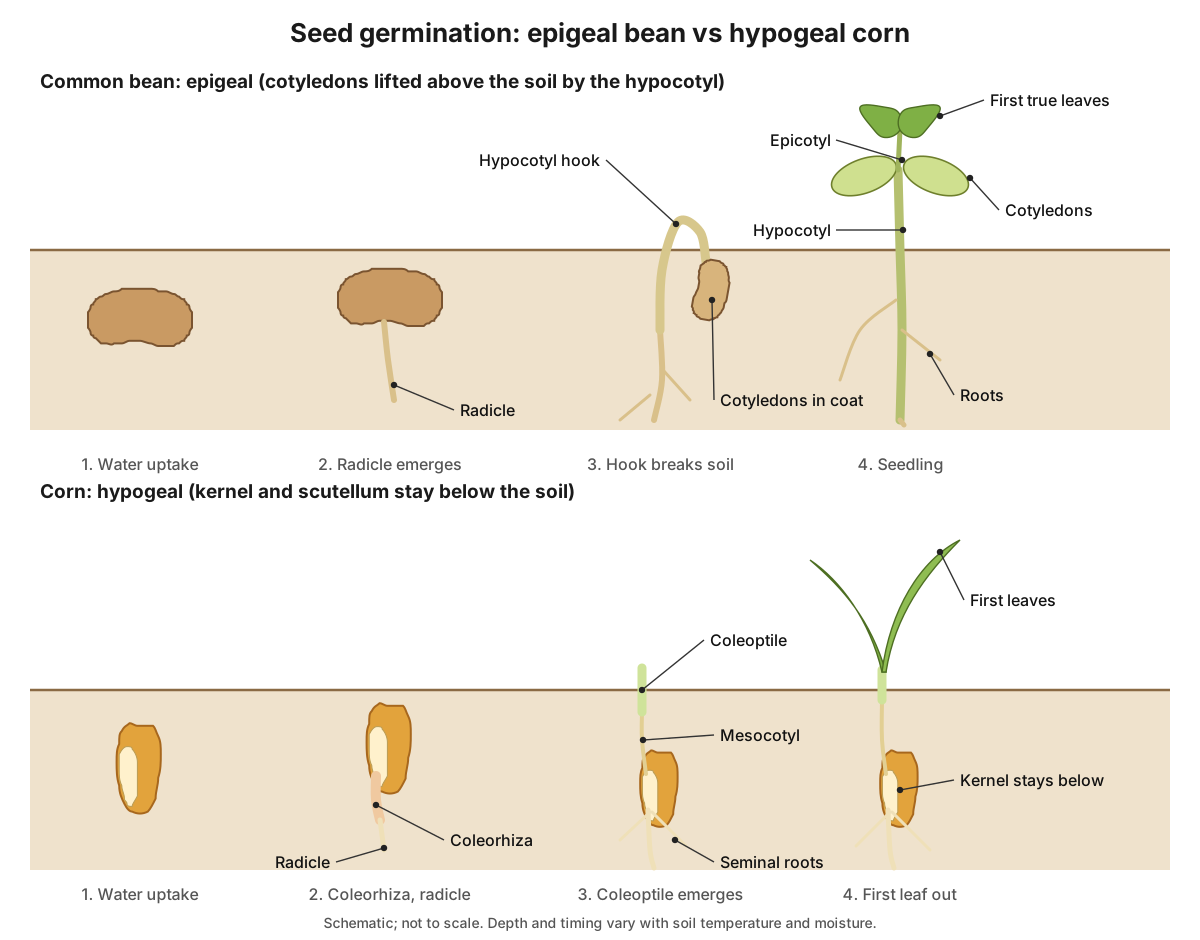
Epigeal germination (bean). The hypocotyl lengthens, bends into a hook and pulls the cotyledons and shoot tip up through the soil; at the surface the hook straightens. The cotyledons open above ground, turn green for a while and then shrivel as their food is used. Common bean, cotton, sunflower and castor germinate this way, and epigeal crops are the most sensitive to soil crusting (Silvertooth, University of Arizona).
Hypogeal germination (corn, pea). The cotyledons stay below ground. In a pea the epicotyl grows up instead. In corn the coleorhiza and radicle come out first, near the tip end of the kernel, usually within two to three days in warm, moist soil; the coleoptile follows, carried up by the lengthening mesocotyl, and then the lateral seminal roots. Corn must take up about 30% of its weight in water before it starts; soybeans need about 50% (Purdue Agronomy). Maize, rice, wheat and coconut are hypogeal, and so are some dicots such as peas. Even within one genus the type can change: the runner bean, Phaseolus coccineus, is hypogeal, unlike the common bean.
In corn the food moves in a relay. Gibberellin made by the embryo travels to the aleurone layer, whose cells then release enzymes that digest the starch and protein in the dead starchy endosperm. The sugars and amino acids are absorbed by the scutellum and passed to the growing shoot and root.
How a seed forms from the ovule
A seed is a fertilized, ripened ovule. Each part of the seed comes from a part of the ovule inside the flower's ovary: the integuments (the ovule's outer layers) become the seed coat, the fertilized egg (zygote) becomes the embryo, and a second fertilization produces the endosperm. The ovary wall around the ovules becomes the fruit. (OpenStax Biology 2e, 32.2 Pollination and Fertilization.)
It starts with double fertilization, which only flowering plants have. A pollen grain lands on the stigma and grows a pollen tube down the style to an ovule, entering it through the micropyle. The tube delivers two sperm cells. One fuses with the egg to make a diploid (2n) zygote. The other fuses with the two polar nuclei of the central cell to make a triploid (3n) cell that divides to form the endosperm. (OpenStax Biology 2e, 32.2 Pollination and Fertilization.)
The zygote divides into a small terminal cell, which builds the embryo, and a basal cell, which forms a stalk called the suspensor that anchors the embryo and feeds it from the mother plant. The embryo passes through globular and heart-shaped stages (in eudicots the two lobes of the 'heart' are the young cotyledons) and then lengthens into a torpedo shape with a shoot tip at one end and a root tip at the other. (OpenStax Biology 2e, 32.2 Pollination and Fertilization.)
What happens to the endosperm decides the type of seed. In grasses such as maize the endosperm keeps growing, fills with starch and protein, and persists in the mature seed. Its cells specialize into an outer aleurone layer, starchy endosperm, transfer cells at the base and cells around the embryo; the starchy cells die as the kernel matures, while the aleurone stays alive. In beans and peas the growing embryo digests the endosperm and moves the food into its cotyledons. (Sabelli & Larkins (2009): The development of endosperm in grasses, Plant Physiology.)
As the seed matures it dries out to a low water content and the seed coat hardens. In beans the stalk of the ovule (funiculus) breaks off, leaving the hilum; in maize the fruit wall fuses to the seed coat to make the pericarp. The micropyle, the pore the pollen tube used, often stays visible beside the hilum. (Ha, Morrow & Algiers, Mature Embryos and Seed Structure (LibreTexts, Raven Biology map).)
To see the ovary, ovules, pollen tube and double fertilization in 3D before the seed forms, open the flower anatomy page.
Seed dormancy: why some seeds wait
Seed dormancy is a state in which a living seed will not germinate even when water, oxygen and temperature are right. Dormant seeds have extremely low metabolic activity and can wait months or, in some species, centuries; dormancy spreads germination over time and stops seeds sprouting at the wrong season. (OpenStax Biology 2e, 32.2 Pollination and Fertilization.)
Seed biologists recognize five classes of dormancy. Physiological dormancy (PD) is a block inside the embryo, often broken by a period of cold or warm, moist conditions; non-deep PD is the most common kind of dormancy worldwide. Morphological dormancy (MD) means the embryo is still too small and has to grow inside the seed first. Morphophysiological dormancy (MPD) combines the two. Physical dormancy (PY) is a waterproof seed coat, as in many legumes, and combinational dormancy is PY plus PD. (Baskin & Baskin (2004): A classification system for seed dormancy, Seed Science Research.)
Gardeners break these blocks on purpose. Nicking or sanding a hard seed coat (scarification) lets water into seeds with physical dormancy, such as sweet pea and morning glory. Keeping seeds cold and moist for several weeks (cold stratification) breaks physiological dormancy in many temperate trees and shrubs, including apples. Crop seeds such as common beans and maize have been bred to have little dormancy, so they germinate as soon as they are planted in warm, moist soil.
Seed anatomy of other plants compared
All flowering-plant seeds have a seed coat, an embryo and a food store, but the details vary a lot. Several familiar "seeds" are really whole fruits. This table compares 19 seeds people often ask about.
| Plant | What you are looking at | Food store | Notable anatomy |
|---|---|---|---|
| Pea (Pisum sativum) | True seed from a pod | Two cotyledons | Exalbuminous; hypogeal germination, the epicotyl grows up |
| Peanut (Arachis hypogaea) | True seed; the shell is the pod, which ripens underground | Two oily cotyledons | Thin red-brown papery testa; the embryonic axis (the 'heart') sits at one end between the halves |
| Soybean (Glycine max) | True seed from a pod | Two cotyledons rich in protein and oil | Exalbuminous; epigeal; needs about half its weight in water to germinate |
| Pumpkin, squash (Cucurbita) | True seed from a berry-like fruit | Two oily cotyledons | Flat seed with a pale coat and a thin rim; the green kernel (pepita) is the embryo in a thin green inner coat; epigeal |
| Sunflower (Helianthus annuus) | Fruit: an achene (cypsela); the striped shell is the fruit wall | Two cotyledons in the kernel | One seed with a thin seed coat inside the hull; exalbuminous; epigeal |
| Marigold (Tagetes) | Fruit: a slender black cypsela | Cotyledons | A pappus of a few scales or bristles at the top, as in other daisies |
| Dandelion (Taraxacum) | Fruit: a cypsela with a beak and pappus | Cotyledons | About 100 pappus bristles form a parachute (see below) |
| Wheat, rice, barley | Fruit: caryopsis (grain) | Starchy endosperm with aleurone | Scutellum, coleoptile, coleorhiza as in corn; rice and most barley keep a husk (lemma and palea); barley aleurone has up to three cell layers |
| Coconut (Cocos nucifera) | One seed inside the shell (endocarp) of a fibrous drupe | Solid endosperm (meat) and liquid endosperm (water) | Tiny embryo under the soft 'eye'; a haustorium absorbs the endosperm |
| Date (Phoenix dactylifera) | One seed (stone) in a berry | Very hard endosperm with thick cell walls | Groove down one side; tiny embryo under a small plug (operculum) on the back |
| Mango (Mangifera indica) | One seed inside a fibrous, woody stone (the endocarp) | Two large cotyledons | Thin papery testa; many cultivars are polyembryonic, with several embryos in one seed |
| Avocado (Persea americana) | One large seed in a berry | Two massive cotyledons | Thin brown seed coat; no endosperm; the seed cannot survive drying |
| Apple (Malus domestica) | True seeds in the core (the five carpels of a pome) | Cotyledons | Shiny brown testa; most seeds need weeks of cold before they germinate |
| Tomato (Solanum lycopersicum) | True seeds in jelly inside a berry | Endosperm round a curled embryo | Albuminous dicot; hairy seed coat |
| Pomegranate (Punica granatum) | True seeds; the juicy layer is the outer seed coat | Cotyledons | Sarcotesta (juicy), hard mesotesta, tegmen; cotyledons rolled up |
| Mustard (Brassica, Sinapis) | True seed from a pod (silique) | Folded cotyledons | Exalbuminous; the embryo is folded with the radicle against the cotyledons; the seed coat turns slimy when wet |
| Coffee (Coffea arabica) | Two seeds in a cherry (drupe) | Hard endosperm | Silverskin is the seed coat; parchment is the endocarp; small embryo |
| Castor bean (Ricinus communis) | True seed from a capsule | Oily endosperm | Albuminous dicot with thin, papery cotyledons; poisonous, never eat |
| Pine (Pinus) and other conifers | Naked seed on a cone scale (gymnosperm) | Megagametophyte (haploid), not endosperm | Three-layered seed coat; several cotyledons; many have a papery wing |
Pumpkin seed anatomy is a good example of an exalbuminous dicot: under the flat, pale outer seed coat is a kernel wrapped in a thin green inner layer and made almost entirely of two cotyledons, with a tiny radicle at the pointed end. Hull-less "naked" pumpkin varieties have a seed coat so thin that the whole seed can be eaten. Sunflower and dandelion "seeds" are fruits: crack a sunflower shell and the kernel inside is the true seed.
Coconut seed anatomy: the largest common seed
A coconut is a fibrous drupe. The smooth skin (exocarp) and fibrous husk (mesocarp) surround a hard, lignified shell, the endocarp, 3 to 6 mm thick. The seed is everything inside the shell: a thin brown seed coat (testa) stuck to the inside of the shell, a layer of white solid endosperm (the 'meat', 0.8 to 2 cm thick), and a central cavity of liquid endosperm, the coconut water. (Beveridge et al. (2022): Fruit biology of coconut (Cocos nucifera L.), Plants.)
The embryo is tiny, a cylinder about 0.8 cm long sunk in the solid endosperm under one of the three 'eyes' at the end of the shell. That soft eye is the germination pore, through which the shoot emerges. As the seed germinates, the end of the cotyledon swells into a spongy, pear-shaped haustorium that grows until it fills most of the cavity, absorbing the oils released from the endosperm and turning them into sugars for the seedling. (Beveridge et al. (2022): Fruit biology of coconut (Cocos nucifera L.), Plants.)
Coffee cherry anatomy: exocarp, mucilage, parchment and silverskin
A coffee bean is a seed. The coffee cherry around it is a fruit whose wall has three layers: the skin (exocarp), a sweet, sticky mucilage (the mesocarp) and a stiff, papery parchment (the endocarp). Inside, each cherry normally holds two seeds facing each other on their flat sides. (Durán-Aranguren et al. (2021): Scientometric overview of coffee by-products and their applications, Molecules.)
Each seed has a thin outer skin called the silverskin, which is the seed coat (spermoderm), around a hard endosperm that makes up most of the bean and develops the taste and aroma when roasted, plus a small embryo. The silverskin is the only by-product of roasting: it flakes off in the roaster as chaff. (Durán-Aranguren et al. (2021): Scientometric overview of coffee by-products and their applications, Molecules.)
Pomegranate seeds: the juicy part is the seed coat
The juicy red 'arils' of a pomegranate are not true arils. Each one is a whole seed whose outer seed coat, the sarcotesta, is a single layer of translucent, juice-filled cells. Under it is the hard, woody mesotesta (the crunchy part), an inner membrane (the tegmen), and an embryo with its cotyledons rolled up inside. (Melgarejo et al. (2024): Accurate botanical nomenclature: pomegranate and the 'aril' misconception, Foods.)
Pine and conifer seed anatomy: megagametophyte, not endosperm
A conifer seed has three main parts: the seed coat, the embryo and the megagametophyte. The megagametophyte is the food store, like endosperm, but it is a different tissue: it is the haploid (1n) female gametophyte that grew before fertilization, so it carries only the mother's genes. The embryo is diploid, and the seed coat, formed from the mother's tissue, is diploid too. (Anatomy and Morphology of Conifer Tree Seed: tree seed components (RNGR).)
The seed coat of a conifer has three layers, an outer fleshy layer, a stony layer (sclerotesta) and an inner fleshy layer. The pointed micropylar end is where the radicle comes out; the rounded chalazal end holds the cotyledons. Conifers have from two cotyledons (western redcedar) to twelve or more (ponderosa pine), arranged like the ribs of an upside-down umbrella round the shoot tip. Many species carry a thin papery wing that spins the seed away from the tree. (Anatomy and Morphology of Conifer Tree Seed: tree seed components (RNGR).)
Dandelion seed anatomy: a fruit with a parachute
What blows off a dandelion clock is a one-seeded fruit called a cypsela (often loosely called an achene). Above the brown fruit is a slender stalk, the beak, topped by a parachute of fine bristles called the pappus. A dandelion pappus has about 100 filaments and is about 14 mm across. Air flowing through the gaps between the bristles forms a ring-shaped vortex that floats just above the pappus, giving it more than four times the drag of a solid disk of the same area. (Cummins et al. (2018): A separated vortex ring underlies the flight of the dandelion, Nature.)
Seed dissection activity: bean and corn
A seed dissection is the easiest plant dissection there is: you need dry beans, dry corn kernels, water, a hand lens, and for the corn, iodine solution. Allow a day for soaking.
- Soak. Put large dry beans (lima, kidney or pinto) in water for 12–24 hours. Soak dry field corn or popcorn kernels for 1–2 days. Keep a few dry seeds to compare.
- Look at the outside of the bean. Find the hilum on the concave edge, the micropyle at one end of it, and the strophiole and raphe at the other. Gently squeeze a soaked bean and watch for water at the micropyle.
- Peel and split the bean. Slip off the testa with a fingernail. Prise the two cotyledons apart from the back (convex) edge. The embryonic axis stays on one half: find the radicle, the hypocotyl and, with a hand lens, the two tiny folded leaves of the plumule.
- Cut the corn kernel. An adult cuts a soaked kernel lengthwise through the middle of the germ (the pale oval on one flat face) with a sharp blade, cutting away from the hand on a board.
- Iodine test. Add one or two drops of dilute iodine solution (Lugol's) to the cut face of the corn and to a bean cotyledon. Starch turns blue-black. The corn endosperm stains dark, the germ stains much less because it stores oil and protein, and the bean cotyledons darken because they store starch too.
- Germinate a few. Put soaked seeds on damp paper towel in a clear cup or bag and watch the radicle appear, then compare the bean's hook with the corn's straight coleoptile.
Safety: iodine stains skin and clothes and is harmful if swallowed; wear goggles and gloves. Do not eat seeds used in the lab, and never use castor beans or treated (coloured) seed corn.
Seed anatomy for kids
A seed is a baby plant packed in a lunch box. The outside is the seed coat, a jacket that keeps the baby plant safe and dry. Inside is the baby plant (the embryo), with a tiny root that grows down and a tiny shoot with leaves that grows up. Next to it is the food, which the baby plant eats until its leaves can make food from sunlight. In a bean, the food is in the two big halves (cotyledons). In a corn kernel, the food is the white and yellow starch around the baby plant. Give a seed water, air and warmth, and it wakes up: first the root comes out, then the shoot.
Seed anatomy worksheet: label it yourself
Test yourself with this seed anatomy worksheet. Print the diagram or open it on screen, write the name of each numbered part, then check your answers in the key. The quiz below has ten short questions with answers you can reveal one by one.
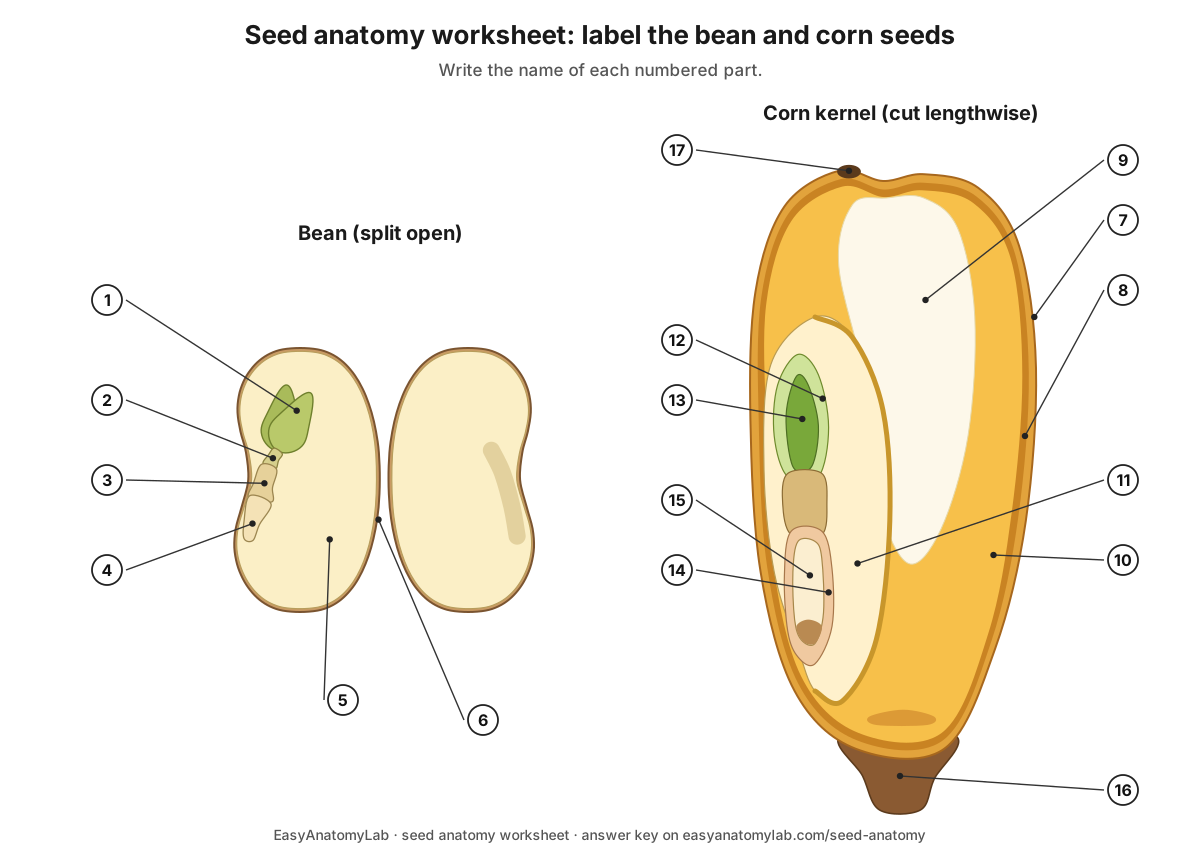
Worksheet answer key
- Plumule (first true leaves)
- Epicotyl
- Hypocotyl
- Radicle
- Cotyledon
- Testa (seed coat)
- Pericarp (fruit wall fused to the seed coat)
- Aleurone layer
- Floury (soft) endosperm
- Horny (hard) endosperm
- Scutellum (the cotyledon)
- Coleoptile
- Plumule (embryonic leaves)
- Coleorhiza
- Radicle
- Tip cap (pedicel)
- Silk scar
Seed anatomy quiz
- Name the three main parts of every seed.
Show answer
Seed coat, embryo and food store (endosperm or cotyledons).
- What is the hilum, and what is the micropyle?
Show answer
The hilum is the scar where the seed was attached to the pod by its stalk. The micropyle is the tiny pore beside it where the pollen tube entered the ovule.
- Where is the food stored in a bean? In a corn kernel?
Show answer
In a bean, in the two cotyledons. In corn, in the endosperm (about 82% of the kernel).
- Which part of the embryo becomes the root? The shoot?
Show answer
The radicle becomes the primary root; the plumule (shoot tip and first leaves) becomes the shoot.
- What are the coleoptile and coleorhiza?
Show answer
Protective sheaths in a grass embryo: the coleoptile covers the shoot, the coleorhiza covers the radicle.
- Why is a corn kernel called a fruit?
Show answer
Its thin fruit wall (pericarp) is fused to the seed coat; a one-seeded fruit like this is a caryopsis.
- What does the aleurone layer do during germination?
Show answer
Gibberellin from the embryo makes it release enzymes that digest the endosperm's starch and protein.
- Is the bean albuminous or exalbuminous? And corn?
Show answer
The bean is exalbuminous (no endosperm left; food in the cotyledons). Corn is albuminous (endospermic).
- Which part lifts the bean's cotyledons out of the soil?
Show answer
The hypocotyl, which forms a hook and straightens in the light (epigeal germination).
- Iodine turns corn endosperm blue-black. What does that show?
Show answer
That the endosperm is full of starch.
Where next: see how the ovule that became this seed sits in a flower on the flower anatomy page, and how a seedling's leaves are built on the leaf cross section page.
Frequently asked questions
What are the three main parts of a seed?
A seed has three main parts: the seed coat, which protects it; the embryo, the baby plant with its radicle, hypocotyl, epicotyl, plumule and one or two cotyledons; and a food store, which is either endosperm (as in corn) or the cotyledons themselves (as in beans).
What is the difference between a monocot and a dicot seed?
A dicot (eudicot) seed such as a bean has two cotyledons, often stores its food in them, and has no coleoptile or coleorhiza. A monocot seed such as corn has one cotyledon, the scutellum, keeps its food in a large endosperm, and has sheaths over the shoot (coleoptile) and root (coleorhiza).
Is a corn kernel a seed or a fruit?
Botanically it is a fruit: a caryopsis, a one-seeded fruit in which the thin fruit wall (pericarp) is fused to the seed coat. Wheat, rice and barley grains are caryopses too. In everyday language and in farming, the kernel is still called a seed.
What is the function of the endosperm?
The endosperm is the seed's food store. It forms from the triploid cell made when a second sperm fuses with the two polar nuclei during double fertilization, and it fills with starch, protein or oil. In corn it makes up about 82% of the kernel; in a bean it is used up before the seed is mature.
What is the hilum of a seed?
The hilum is the scar on the seed coat where the seed was attached to the fruit by its stalk (funiculus). On a bean it is the oval mark in the middle of the concave edge, with the micropyle at one end.
Which part of the seed grows first?
The radicle, the embryonic root. It breaks out of the seed coat (in beans) or out of the coleorhiza (in corn) first, anchors the seedling and starts taking up water. The shoot follows.
What is the difference between epigeal and hypogeal germination?
In epigeal germination, as in the common bean, sunflower and cotton, the hypocotyl lengthens and lifts the cotyledons above the soil. In hypogeal germination, as in peas, corn, wheat and coconut, the cotyledon or cotyledons stay underground and the epicotyl (or, in grasses, the mesocotyl and coleoptile) carries the shoot up.
Why do you soak beans before dissecting them?
Soaking for 12 to 24 hours softens the seed coat so it peels off, and swells the cotyledons so they separate cleanly. A dry bean is too hard to split without crushing the tiny plumule and radicle.
Do pine seeds have endosperm?
No. Pines and other conifers are gymnosperms, which have no double fertilization. The food tissue round a pine embryo is the haploid female gametophyte (megagametophyte), formed before fertilization, not triploid endosperm.
References
- OpenStax Biology 2e (2018, updated). 32.2 Pollination and Fertilization: double fertilization, development of the seed, seed germination. Rice University.
- Ha, M., Morrow, M. & Algiers, K. Mature Embryos and Seed Structure. LibreTexts Biology (Raven Biology map), CC BY-SA.
- The Botanist in the Kitchen (2016). Botany lab of the month: bean and chickpea seed structure.
- Nielsen, R. L. Visual indicators of germination in corn. Purdue University Department of Agronomy, Corny News Network.
- U.S. Grains Council. Corn Harvest Quality Report 2019/2020: corn kernel composition.
- Sabelli, P. A. & Larkins, B. A. (2009). The development of endosperm in grasses. Plant Physiology 149: 14–26.
- Silvertooth, J. C. (2022). Germination and seedling development. University of Arizona Cooperative Extension.
- Baskin, J. M. & Baskin, C. C. (2004). A classification system for seed dormancy. Seed Science Research 14: 1–16.
- Beveridge, F. C., Kalaipandian, S., Yang, C. & Adkins, S. W. (2022). Fruit biology of coconut (Cocos nucifera L.). Plants 11: 3293.
- Durán-Aranguren, D. D. et al. (2021). Scientometric overview of coffee by-products and their applications. Molecules 26: 7605.
- Melgarejo, P. et al. (2024). Accurate botanical nomenclature: pomegranate and the 'aril' misconception. Foods 13: 201.
- Anatomy and Morphology of Conifer Tree Seed: tree seed components. Reforestation, Nurseries and Genetic Resources (RNGR).
- Cummins, C. et al. (2018). A separated vortex ring underlies the flight of the dandelion. Nature 562: 414–418.
- Further reading: Esau, K. (1977). Anatomy of Seed Plants, 2nd ed. New York: John Wiley & Sons. A classic textbook of plant anatomy.
More interactive anatomy models
- Flower anatomyParts of a flower in 3D: petals, sepals, stamens, pistil, ovary and ovules of a lily.
- Leaf cross sectionLabeled leaf cross section: cuticle, epidermis, palisade and spongy mesophyll, veins.
- Stomata diagramGuard cells, stomatal pore and how stomata open and close, in 3D.
- Chloroplast structureEnvelope, stroma, thylakoids, grana and lumen of a chloroplast, in 3D.
- Human anatomy1,000+ bones, muscles, organs, vessels and nerves from real anatomical data.
- Octopus anatomyThree hearts, a ring-shaped brain, eight arms and a beak, in 3D.